Article
The buttonhole of a shirt: the detail that tells you how it is made
A whipped eyelet barely wider than a button. It is the quickest test there is for how much care went into a shirt.
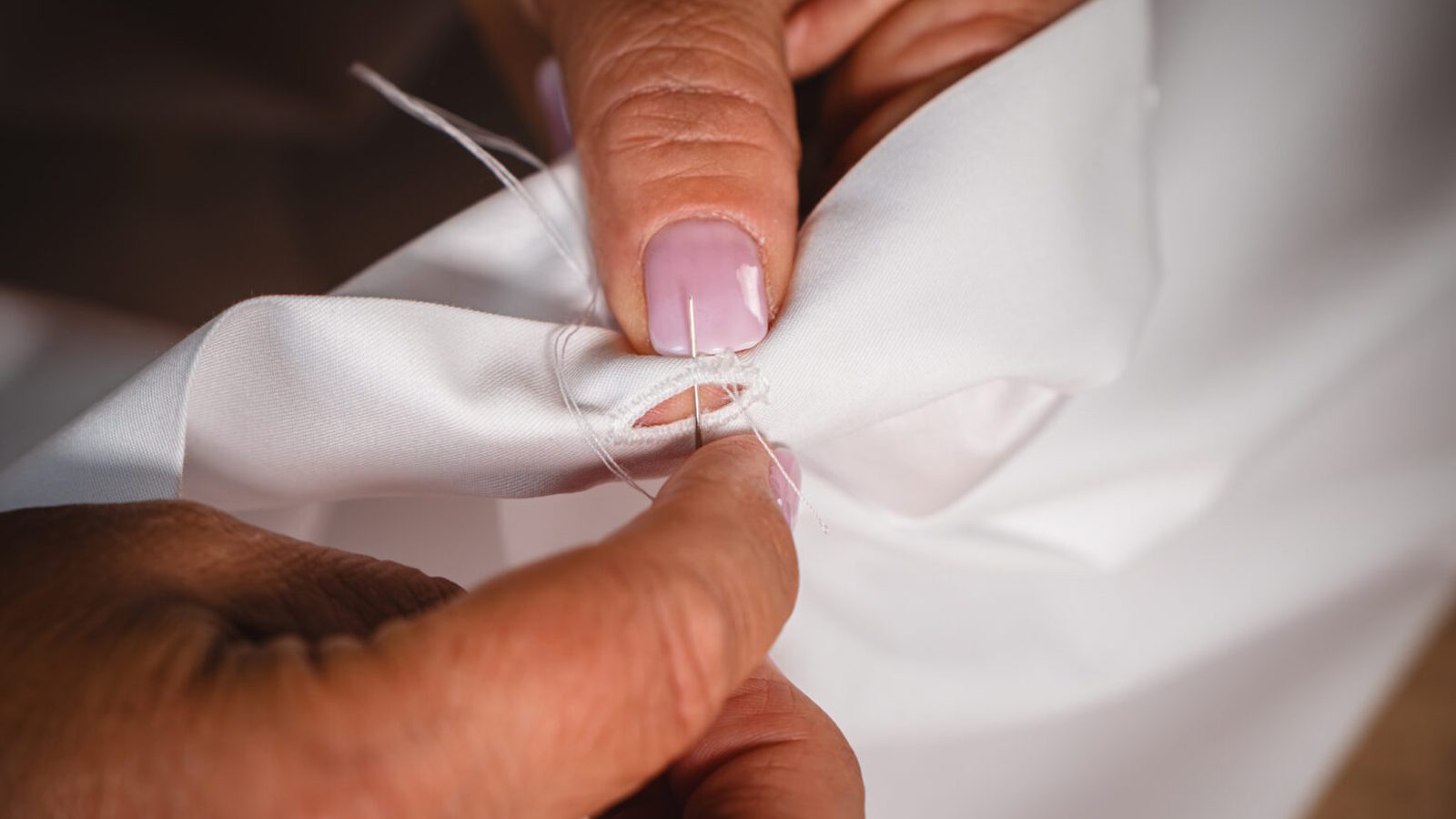
Asola, the Italian word, comes from the Latin ansula, meaning cut. The name already says where the hard part is: the cut has to be perfect, because that is where the cloth can fray.
What it is, and what it has to do
The buttonhole is the whipped eyelet the button goes through, and its job is to hold two pieces of cloth together steadily. Too wide and the button comes out on its own; too tight and you struggle every morning while the edges wear away.
That is why the part that counts is the cut: precise, and exactly the right length for that button. It is what makes a buttonhole last for years without widening.
The stitch has a name of its own
The stitch that whips the buttonhole — once embroidered by hand, today almost always by machine — is worked very close, in tiny stitches, so that the cloth cannot fray as the button passes and the eyelet cannot widen out of shape.
The thread is a thread of its own: fine and very strong. On a shirt washed twice a week it is the buttonhole thread that decides how long the front stays in order.
The thread: tone on tone, or in contrast
The thread is chosen in the colour of the shirt, which is the classic way, or in contrast. A darker shade of the same colour is barely noticed and gives the front some depth; an altogether different colour is a declared choice, and should be made knowing it will be seen.
The best known case is the white dinner shirt, with black buttonholes and white mother-of-pearl buttons: there the contrast is not a flourish, it is part of the code.
The last buttonhole is horizontal, and there is a reason
On a classic shirt the buttonholes down the front are all vertical except the last, which is horizontal. It is not a whim: the horizontal buttonhole locks the fastening and stops the bottom button from slipping out as you move.
It comes from the days when the shirt was fastened to the trousers so that it would not come out and billow. The practice has gone, the detail has stayed, and it is one of the quickest ways to recognise a well-designed shirt.
How many there are, and where to look
A shirt has between nine and twelve buttonholes, as many as it has buttons: the whole front, the cuffs, the pocket when there is one and, on button-down shirts, the points of the collar too.
Lined up, they are the detail that repeats most often across the whole shirt, which is why rough work there does not go unnoticed. Hold them up to the light: the stitches should be close and even, and the cut should not show a single loose thread.
In the Sartoria selection the buttonholes are sewn by hand, one by one: it is the point where the difference between an assembled shirt and a sewn shirt shows.
Design your shirt