Article
Handmade shirt: the details that matter
“Handmade” does not mean sewn entirely by hand. It means the hand steps in where the machine cannot reach: at the points where a shirt moves, opens and wears.
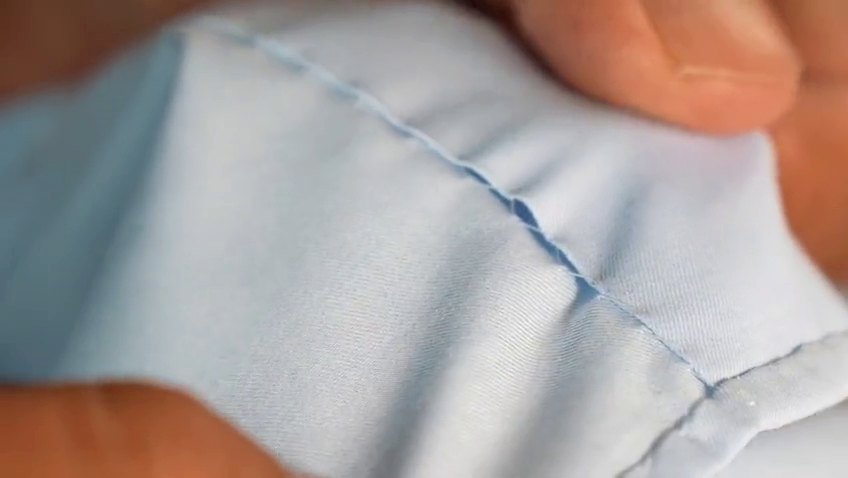
The details described here are those of the Maestria and Sartoria collections, each with its own page on the site.
Machine and hand, each in its place
Long, straight seams — the sides, the sleeves — come out better by machine: regular, strong, identical from the first stitch to the last. The hand is needed where elasticity, precision and control are needed: the curves, the openings, the points that work hardest.
This is why a serious handcrafted shirt does not say “entirely by hand”: it says which details are done by hand. They are the ones that follow.
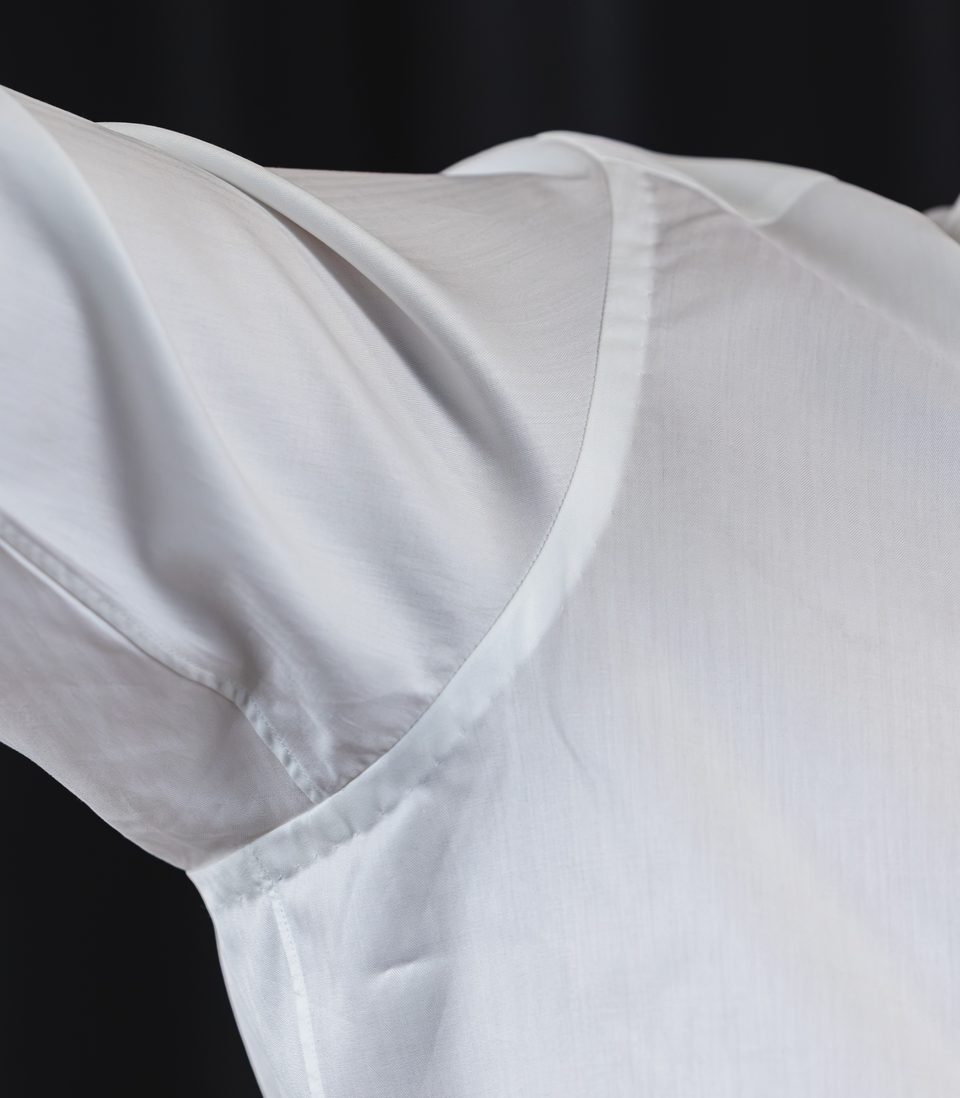
The armhole and the shoulder, finished by hand
The armhole is the seam that joins the sleeve to the body, and it is the one that works hardest every time you raise your arm. Finishing it by hand all the way round neatens and strengthens the seam and makes it softer in movement. It is one of the details of the Maestria collection.
In the Sartoria collection the shoulder is finished by hand too: the seam follows the line of the shoulder and gives the shirt a cleaner look.
Buttonholes and buttons
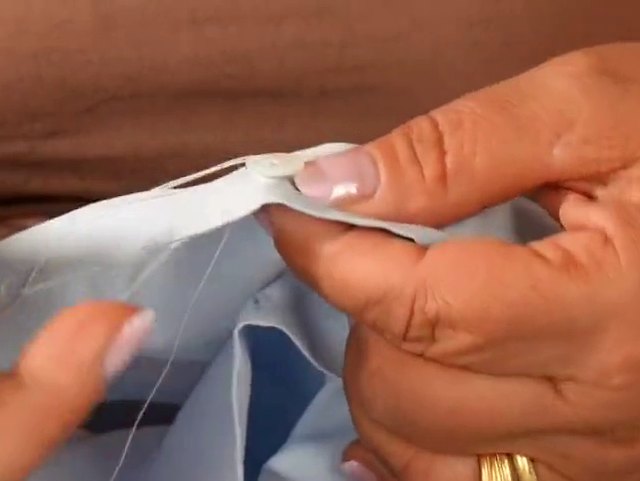
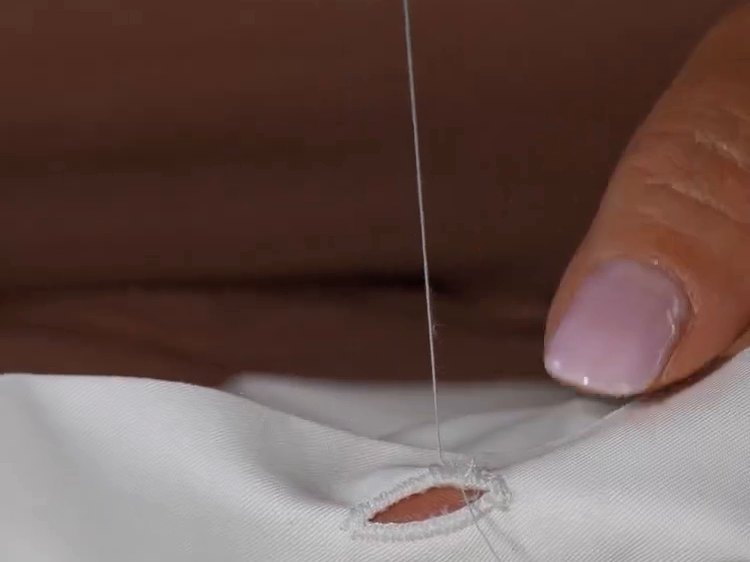
In the Sartoria collection the buttonholes are sewn and finished by hand, one by one: the shape, the evenness of the stitch and the edges are checked stitch after stitch. The buttons are attached by hand, with care for their position and the tension of the thread.
They are the detail you touch every morning, and the one where the difference between mass-made and hand-sewn shows most.
Hems, bar tack, monogram
The hems of the Sartoria collection are finished by hand: the hand follows every curve of the shirt tail, with a discreet finish that does not pull the fabric.
In the Maestria collection the sleeve placket has a reinforcing bar tack, at the point where the opening is under most strain, and the monogram is embroidered by hand: a personal signature, small and precise.
How to recognise a hand-sewn stitch
A machine stitch is perfectly identical to the next one. A hand stitch is regular but alive: the distance between one stitch and the next follows the curve of the fabric, and up close you can see that each stitch was drawn by hand. It is not a flaw: it is the sign that someone worked on it.
Look at the buttonholes against the light, at the armhole from the inside, at the hem at the bottom. If a shirt is made by hand where it counts, that is where you see it.
The handwork, in brief
| Detail | What it does | Collection |
|---|---|---|
| Hand-finished armhole | Strengthens the seam that works hardest | Maestria and Sartoria |
| Bar tack on the sleeve placket | Reinforces the cuff opening | Maestria and Sartoria |
| Hand-embroidered monogram | A personal signature | Maestria and Sartoria |
| Hand-sewn shoulder seam | Neatens the line of the shoulder | Sartoria |
| Hand-sewn buttonholes | Shape and edges checked stitch by stitch | Sartoria |
| Hand-sewn buttons | Precise attachment, the right tension | Sartoria |
| Hand-finished hems | A clean finish that follows the curve | Sartoria |
The handwork is found in the Maestria and Sartoria collections. Design your shirt: choose the collection, the fabric and your measurements.
Design your shirt