Guide
The shirt collar: how to choose one
From two metres away, what you see of a shirt is the collar. Everything else is seen afterwards, and usually not at all.
The rule about long faces and wide faces is a hint, not a law. What counts more is the neck you have and how you wear the shirt: anyone who never wears a tie needs a collar that stands up on its own, and that is a question of structure, not of shape.
The collar is the part people look at
It is framed by your face and the knot of your tie, it sits at the eye level of whoever is talking to you and it is never covered by a jacket. Two identical shirts with two different collars look like two different shirts.
It is also the part that ages first: a tired collar shows from across the room, while a worn cuff is seen only by you.
The six collars, and what each is for
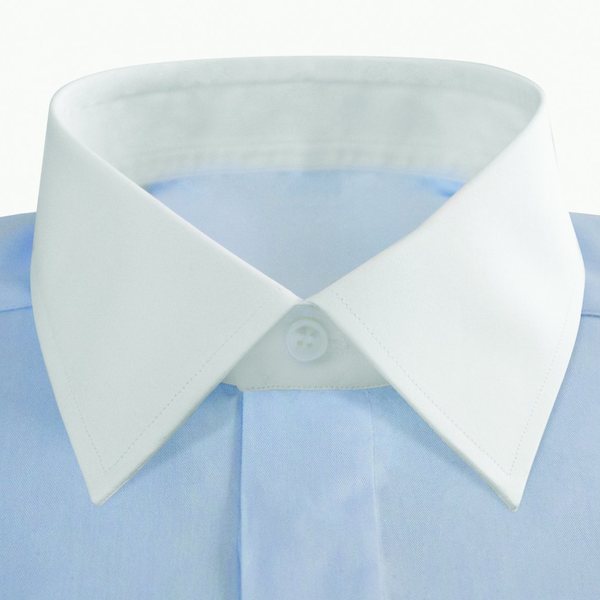
The Italian classic has long points set fairly close together: it is the most discreet, it works under a jacket and with a tie, and it is the one that goes wrong least when you do not know which to pick. The Italian classic, trend cut is the same collar with shorter, closer points: leaner, and more severe.
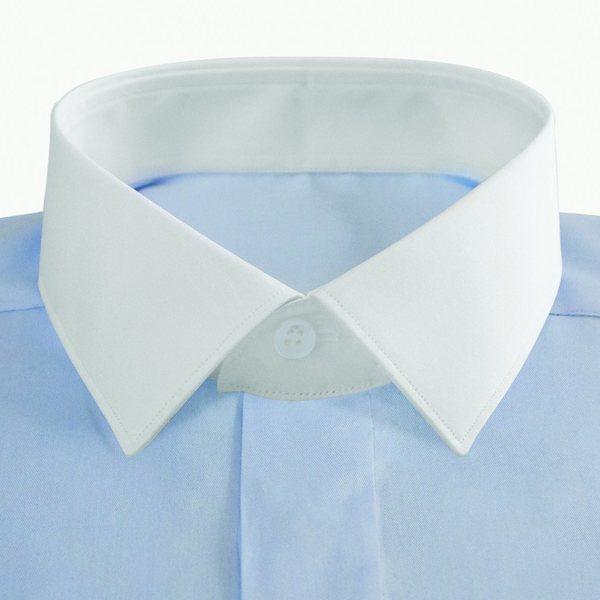
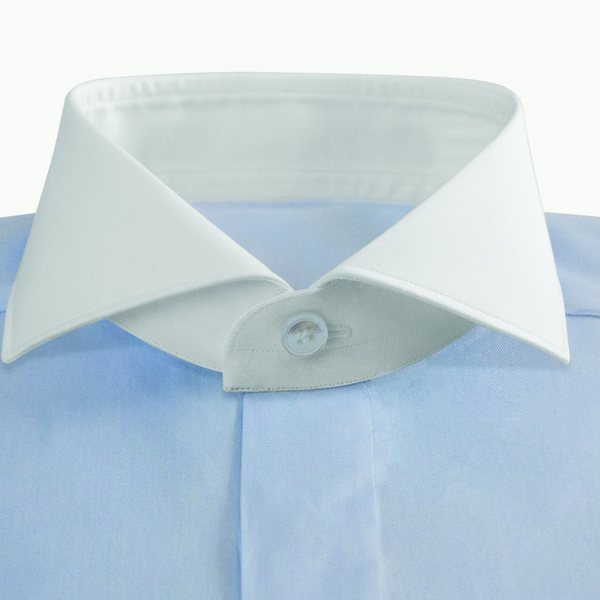
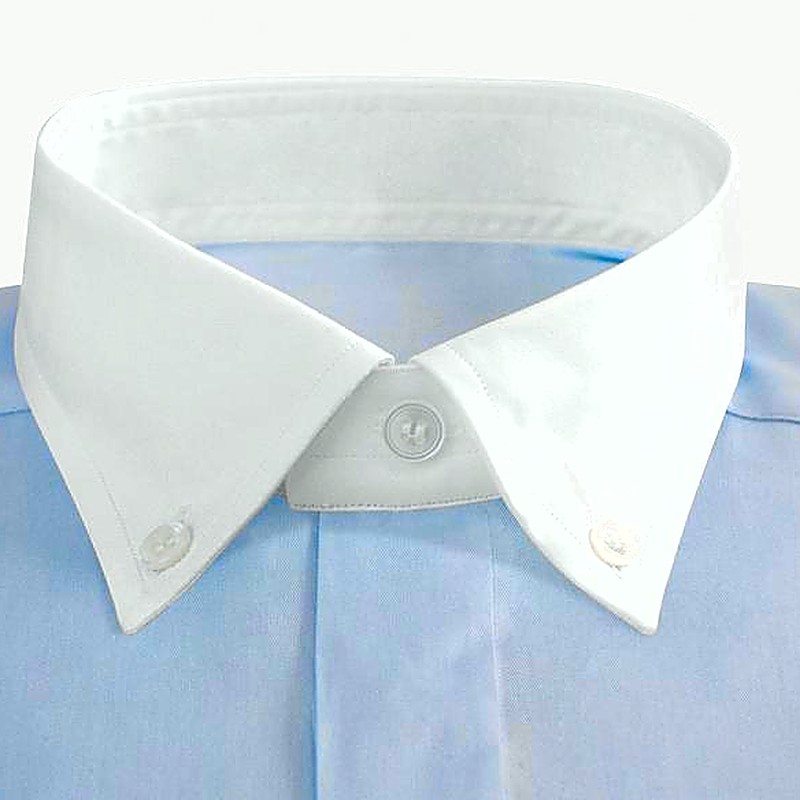
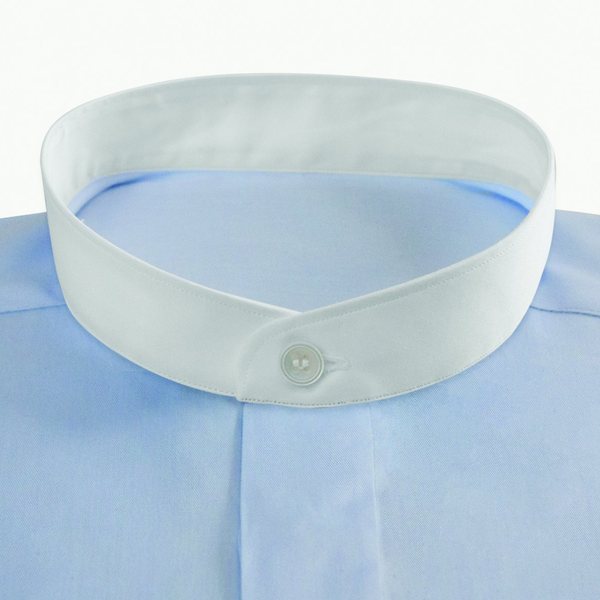
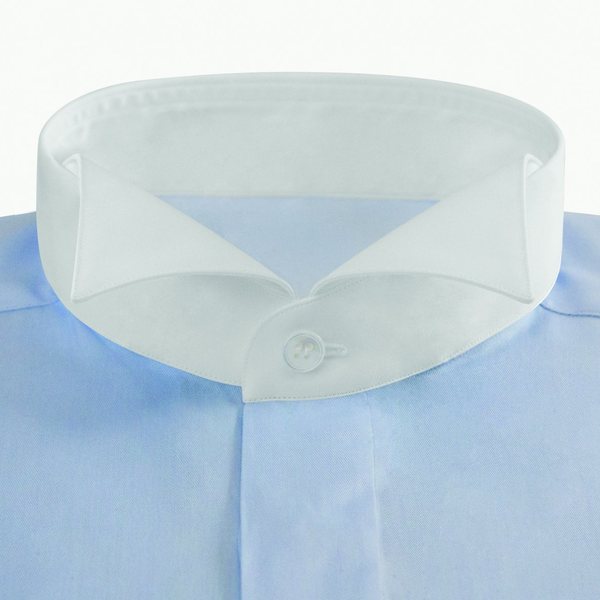
The French classic opens the points almost to the horizontal: it wants a tie with a full knot. The button-down buttons them to the shirt: it was born sporty and it is the only one that stands up on its own without stays. The mandarin has no points and takes no tie — it is the summer collar. The wing collar is for black tie, with a bow tie, and spends the rest of the year in a drawer.
The spread, in centimetres, and the knot
The spread is the distance between the two points, and in the configurator it is a number: 7.5 cm on the Italian classic trend cut, 8 on the button-down, 9.5 on the Italian classic, 13.5 on the French. Almost everything else follows from those four numbers.
The wider the points, the bigger the knot has to be to fill the space. A small knot inside a French collar leaves a triangle of shirt bare under the chin; a big knot inside a trend cut pushes the points outwards and lifts them. If you always tie the same knot, choose the collar from the knot.
Inside the collar matters more than outside
Inside there is an interlining that gives the shape. If it is sewn, the collar stays soft and alive for years and comes back as it was after a wash. If it is fused, after a few dozen washes the glue lets go in patches and the collar bubbles: from there it never comes back.
Then there are the stays, the two slips you push into the points to keep them straight. Metal ones hold better than plastic ones and have to come out before the wash — it is the shortest piece of maintenance there is and almost nobody does it.
If you have to choose only one
The Italian classic. Its 9.5 cm of spread is the middle ground: enough to hold a tie without demanding a big knot, and without a tie the points stay where they are instead of opening. It goes under a jacket and it goes through a day without one.
The second one, when you order another shirt, depends on how the first one lives: always without a tie, button-down; always with a jacket and a full knot, French; for the summer, mandarin. The wing collar you buy when you need it, not before.
In the configurator the six collars are shown side by side, on the fabric you have chosen. Try them: it is the choice that changes the face of the shirt most.
Design your shirt